
It’s Not Sin. It’s Heartbreak: Rethinking Why Jesus Came
A radical shift from judgment to healing the human condition

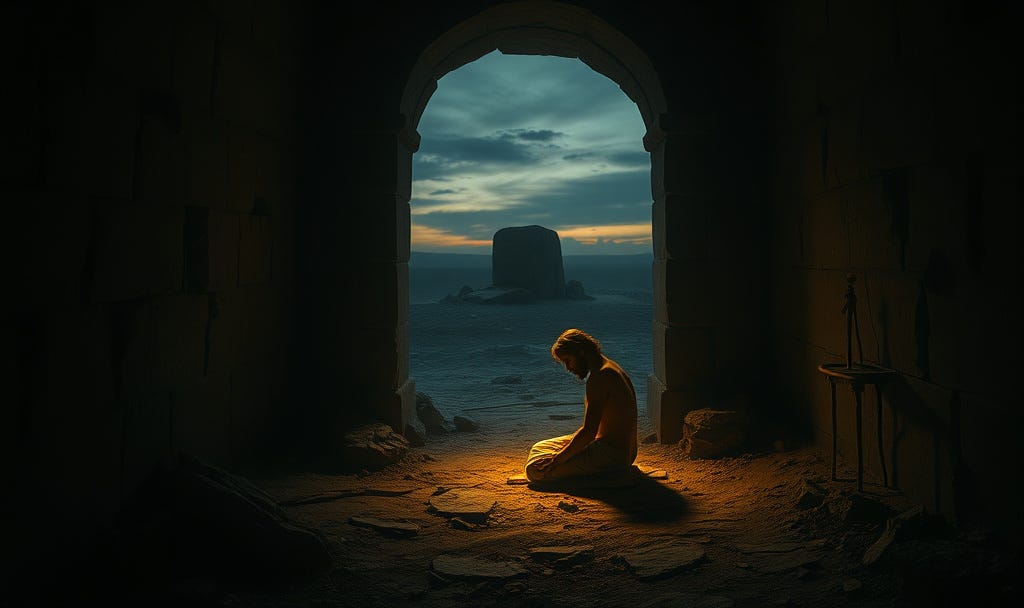
This reflection is inspired by Through Holy Week with Mary Magdalene, guided by the teachings of Cynthia Bourgeault. In this series, Holy Week is not treated as a courtroom drama about guilt and acquittal, but as an initiation into conscious love. When Mary Magdalene is restored to her rightful place at the foot of the cross, the meaning of crucifixion shifts decisively. What had long been framed as cosmic bookkeeping is revealed instead as love demonstrating its own inner logic to the end.
When the Old Explanation Feels Too Small
There comes a point where the standard Christian explanation for everything starts feeling strangely thin.
Human beings sinned. God required payment. Jesus died to satisfy the debt. Believe correctly and the account is settled.
For some people, that framework works cleanly and permanently. But for many others, especially after enough grief, loss, regret, and ordinary human suffering, it begins to feel like it is answering a different question than the one people are actually living.
Because most people are not walking around tormented by abstract theological guilt. They are exhausted. Heartbroken. Frightened. Ashamed. Lonely. Numb. Regretful. They are carrying divorces, funerals, betrayals, addictions, aging parents, bodies that no longer cooperate, dreams that collapsed quietly ten years ago, and the ache of trying to stay tender in a world that keeps teaching people to armor up.
And then Christianity often arrives saying, “Your main problem is that you violated divine law.”
You can feel the mismatch.
What If Heartbreak Comes First?
Bourgeault does not deny sin. She is not arguing that human beings are harmless or spiritually enlightened underneath it all. What she questions is whether sin itself is the deepest layer of the human predicament.
Her suggestion is more unsettling than that.
What if heartbreak comes first?
What if the human being enters a world already shaped by limitation, mortality, separation, time, and loss, and what we call sin is often the way frightened people react to those conditions?
That lands differently.
Because suddenly sin is no longer just rebellion. Sometimes it is collapse. Sometimes it is self-protection. Sometimes it is despair that hardened into habit.
The wounded self reaches for control. The ashamed self hides. The lonely self clings. The terrified self manipulates. The exhausted self goes numb. Human beings do terrible things, yes, but beneath a great deal of what we call sin is unresolved heartbreak.
The Plank’s Constant of Pain
Bourgeault speaks about a kind of “plank’s constant” of pain, heaviness, debt, or burden woven into human existence. The older atonement models tried to explain this by pointing back to Adam. One act of disobedience supposedly opened the floodgates, and everything that followed became part of the fallout.
But that explanation strains under the weight of the world we actually know.
We live with deep time, evolution, extinction, aging, limitation, and the simple reality that creatures suffer long before anyone can assign them moral guilt. Bourgeault is not mocking the Adam story. She is asking whether it can carry the entire burden of human anguish.
And maybe it cannot.
Maybe the ache is older than blame.
Maybe the human condition is not first a courtroom, but a wound.
Density Is Not Punishment
This is where the teaching takes a sharp turn.
Bourgeault does not say the world is evil because it is hard. She describes it as dense. This realm is governed by time, gravity, embodiment, finitude, and consequence. You cannot walk through walls. You cannot return to every missed moment. You cannot keep every body from dying. You cannot love without eventually facing loss.
That does not mean creation is cursed.
It means this realm has conditions.
And under these conditions, certain kinds of love become possible that might not appear anywhere else. Fidelity matters because love can be tested. Tenderness matters because people can be wounded. Mercy matters because failure is real. Courage matters because fear has actual teeth.
The density of this world makes heartbreak possible, but it also makes a particular depth of love possible.
That is the strange mystery.
Jesus Enters the Human Wound
So why does Jesus come?
In this reading, not primarily because God needs blood before mercy can happen. Jesus comes because the human condition is almost more than we can bear.
We break under it.
We lose trust. We numb out. We lash out. We build defenses and then call them personality. We confuse survival strategies with identity. We wound others from the places where we ourselves have not been healed.
Jesus enters that.
Not from above. Not from a safe theological distance. He enters betrayal, abandonment, fear, public humiliation, physical agony, and death. He enters the full density of the human condition and does not turn away from it.
That is the revelation.
Love goes all the way down.
The Cross Is Not Cosmic Bookkeeping
The cross changes meaning when seen this way.
It is not God demanding violence before forgiveness can be released. It is divine love entering the place where human beings most lose confidence in love.
The Passion is not payment in the crude transactional sense. It is presence. It is God meeting the human condition from inside the wound itself.
That does not make suffering beautiful. It does not make injustice holy. It does not excuse cruelty, empire, betrayal, or religious violence. It means that even there, especially there, love refuses to abandon the field.
The cross reveals a love that can be pierced without becoming bitter.
That may be the deeper salvation.
The Heart of the Earth
Bourgeault’s reading of Holy Saturday deepens this even further. She distinguishes between the later phrase “descended into hell” and the older image of Jesus descending into the heart of the earth.
That shift matters.
The heart of the earth is not merely a mythological basement. It is the deepest density of the human condition, the root place where limitation, grief, time, fear, and heartbreak gather.
Jesus enters that hidden place.
He does not condemn it. He does not explain it away. He sits inside it and lines it with love.
That image is powerful because most of us have places inside ourselves that feel like buried earth. Old grief. Old shame. Old dread. Old disappointment. The parts of us we do not bring into polite prayer because they do not fit the tidy version of spirituality.
But Holy Saturday says Christ enters there too.
Mary Magdalene and the Love That Remains
Mary Magdalene matters because she does not flee the threshold.
She remains at the cross. She remains near the tomb. She remains in the space where love looks defeated and no explanation has arrived yet.
That is conscious love.
Not emotional collapse. Not spiritual bypass. Not denial. Presence.
In Bourgeault’s vision, Magdalene becomes the witness that love is stronger than the interpretive systems built around it. She does not need to turn the moment into doctrine. She stays with the beloved, and in that staying, something deeper is revealed.
This is why the Passion changes when Magdalene is restored to the center. The story is no longer only about what Jesus accomplishes legally before God. It is also about what love becomes when it refuses to abandon presence, even in the face of death.
Why This Changes God
This changes how God is imagined.
If the main problem is legal guilt, God easily becomes the judge who must be satisfied.
But if the deeper wound is heartbreak, God becomes the one who enters the wound.
Prayer changes. It stops being an attempt to calm down an offended deity and becomes a way of opening the broken places to the love already moving toward them.
Repentance changes. It is not merely shame management. It is the slow surrender of the defenses we built around pain.
Salvation changes too. It becomes more than acquittal. It becomes the restoration of the heart’s capacity to trust, to soften, to remain open, and to love without turning bitter.
The Real Human Problem
The real human problem is not that people occasionally break rules.
The deeper problem is that people break.
Then they build a life around the break.
Then they forget there was ever anything underneath the armor.
This is why a sin-obsessed Christianity can feel so spiritually inadequate. It may correctly name the outer distortion while missing the wound beneath it. It may condemn the symptom while failing to touch the sorrow. It may demand repentance without understanding what the person has been trying so desperately to survive.
Bourgeault’s vision does not remove moral responsibility. It deepens it.
Because once heartbreak is seen clearly, we can no longer pretend our defenses are innocence. But we also no longer have to believe God meets us first with accusation.
God meets us in the wound.
Love Inside the Density
Jesus does not come to erase the density of this world. He comes to inhabit it so completely that love becomes discoverable even there.
In grief.
In regret.
In limitation.
In the ache of what cannot be undone.
In the silence between death and resurrection.
That is not a smaller Gospel. It is a more intimate one.
It says the human heart can be broken open instead of broken closed. It says the places that feel most abandoned may be precisely where love is doing its hidden work. It says salvation is not merely being declared innocent, but becoming capable of love again.
And that may be why Jesus came.
Not to satisfy divine bookkeeping.
To enter the heartbreak of the world and show us that love can survive there.
Keep the Scrolls Unrolling
The Virgin Monk Boy Scrolls is a free publication.
If these words steady you, challenge you, make you laugh, or help you breathe deeper, here are three simple ways to support the work.
Share the Scrolls
Passing a link forward is how more wandering souls stumble into the monastery. Word of mouth is the whole engine.
Become a Supporting Member
Paid members unlock the Virgin Monk Boy Book Of Hours, Whispers from the Silence, and the ability to start threads and share their own Substacks in the private chat.
Tip with a coffee
A one time gift of holy caffeine that fuels both the monk and the Magdalene movement. ☕🔥

Your presence alone already helps.
Your support keeps the lantern lit for everyone else.
This feels very close to the path of mercy.
So much religion begins with accusation: you are guilty, you are unworthy, you must be fixed before love can reach you.
But the wound often goes deeper than the rule we broke.
From where I sit, God does not meet the broken heart first with a courtroom. God meets it with nearness.
The real miracle is that love can enter the heartbreak without becoming bitter, and can teach the heart to open again.
In a meditation last July Jesus said to the group I was channeling for: “All atrocities are committed by people with deeply broken hearts. And the only way to heal a broken heart is through an open heart.”
we are asked to keep our heart open even in the face of so much suffering. That is where we find our divinity—in the midst of our humanity. 💝