

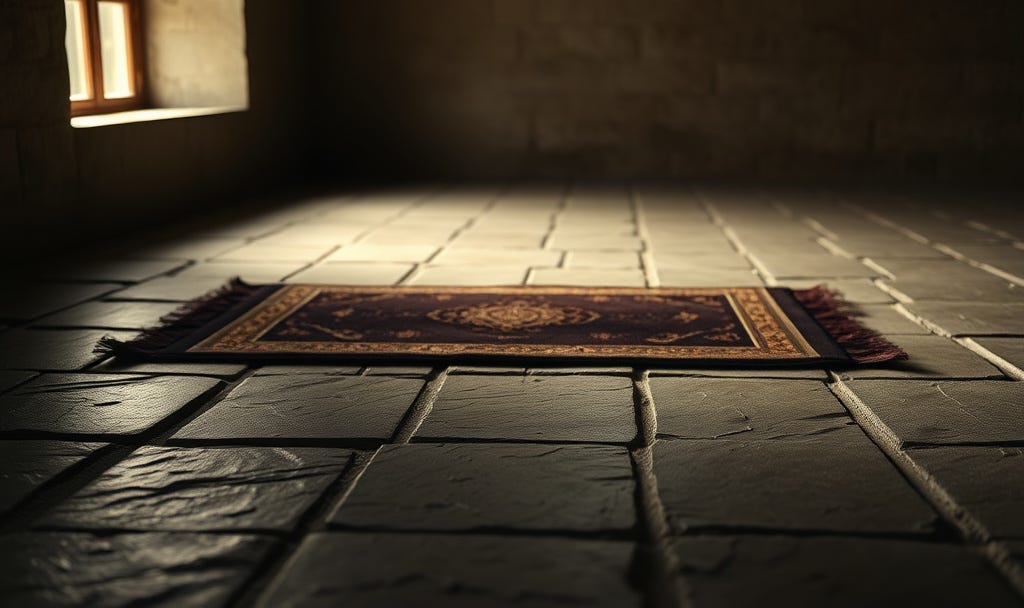
Watching the surge of anti-Muslim rhetoric over the last few years, including protests outside places like the EPIC Islamic Center in Plano, is what finally pushed this reflection into words. The language keeps repeating itself: Islamic invasion. They’re taking over. They’re forcing their beliefs on us.
In my mind, that language only really makes sense if you believe a religion spreads primarily through coercion. Forced conversion. Pressure. Power.
But that’s where the story collapses.
You don’t explain attraction with force. You don’t explain conversion by shouting “invasion.” And you don’t explain the steady stream of converts to Islam by pretending people are being dragged into something against their will. You only need coercion when a structure can’t hold people on its own. You don’t need it when a way of life actually forms those who step into it.
That contrast is what sparked the question I couldn’t shake, especially because the loudest accusations of “invasion” were coming from a religious culture already in the middle of its own unraveling.
The Question That Wouldn’t Go Away
Why is it the religion accused of “invasion” that shows so little public deconstruction, while the religion that splintered into tens of thousands of denominations has become the loudest site of doubt, unraveling, and reconstruction? Why is the faith most often accused of rigidity not producing a cottage industry of influencers dismantling it from the inside?
Before going further, a brief note, because this comes up every time: the claim that Islam coerces conversion through taxation doesn’t hold up. Muslims are required to pay zakāt, a mandatory charity that is higher than what non-Muslims historically paid. The idea that jizyah was a financial punishment ignores that Muslims bore the greater obligation. Whatever one thinks of historical systems, reducing this to “pay to not be Muslim” is simply inaccurate.
So the question remained.
Does Islam even have the same relationship to deconstruction at all?
This Was Not an Armchair Question
This curiosity wasn’t theoretical. It didn’t come from reading polemics or watching debates online. It came from encounter.
Virgin Monk Boy has always resisted the fusion of religion and coercive power. That resistance didn’t call me to argue about Islam from a distance, but to learn. To listen. To show up. To engage Muslims as neighbors. And eventually, to step into the mosque not as a spectator, but as a participant. In the background, I had also been carrying a long-standing interest in learning ṣalāt itself, after a Sufi teacher recommended the five daily prayers as part of classical Sufi formation.
That meant experiencing ṣalāt from the inside, not observing it as a cultural artifact. Committing to the rhythm of prayer. Five daily prayer sessions. Fard and Sunnah rakʿahs. Forehead to the ground, again and again, while reciting Subḥāna rabbiyal aʿlā (Glory be to my Lord Most High).
What struck me wasn’t the theology, but the technology of transformation.
This is very much similar to the Buddhist Field of Merit concept, only in Islam, the field of merit is entered, not constructed. That’s exactly the pivot Tibetan teachers try to induce when they say, “Don’t study the thangka. Enter it.” Ṣalāt just skips the art gallery and hands you the floor.
Different cosmologies. Same ego-breaking technology. One imaginal. One relentlessly real.
This is not a metaphor-heavy spirituality. It is embodied, repetitive, humbling. It leaves little room for performance and even less for theory divorced from practice. Armchair philosophy doesn’t survive long when the body is required to submit before the mind finishes its commentary.
What follows is not apologetics. It’s what happens when practice is encountered instead of theorized.
Why Deconstruction Looks Different Here
It’s not that Muslims don’t struggle, question, doubt, or wrestle. They do. Anyone who thinks otherwise hasn’t spent time listening. But the shape of that wrestling looks very different.
One reason is structural. Islam is not held together primarily by abstract belief statements. It is anchored in daily, embodied practice. Prayer five times a day. Fasting. Charity. Recitation. Submission of the body before the mind finishes its arguments. You can be confused, angry, uncertain, even wounded and still be praying. That matters. When faith lives in the body, it doesn’t collapse the moment an idea cracks.
Why Christianity Became the Loud Site of Deconstruction
Most modern Christian deconstruction isn’t actually about God. It’s about discovering that belief was propped up by culture, identity, politics, or social belonging rather than disciplined practice. When the social scaffolding falls away, there’s often nothing underneath to carry the weight. So the whole thing gets dismantled publicly, sometimes theatrically.
Islam doesn’t offer that same exit ramp. Its boundaries are clearer. You’re either submitting to God or you’re not. There’s very little room for “Islam but only the parts that affirm my preferences.” That doesn’t make Muslims superior. It makes the tradition harder to curate around the ego. And deconstruction thrives where the self is treated as the final authority.
Why Struggle Doesn’t Become Spectacle
There’s also the question of incentive. In Western Christian contexts, deconstructing publicly often brings affirmation, platforms, book deals, and social reward, especially online. In Muslim communities, public dismantling carries real cost. Family ties. Community trust. Social belonging. That doesn’t mean doubt disappears. It means it’s handled privately, soberly, inwardly, not turned into content.
Another difference is that Islam has not hollowed out its practices. Whatever else can be said, the form still forms. The prayers interrupt the self. The fast disciplines desire. The Qur’an is recited, not just discussed. Islam still expects submission rather than self-expression as the organizing principle. That alone prevents the kind of endless fragmentation we see elsewhere.
So when people ask why Islam doesn’t seem to be “deconstructed,” the answer isn’t that Muslims don’t think. It’s that Islam doesn’t easily turn struggle into spectacle. Wrestling happens, but it happens on the prayer mat, not the podcast circuit.
And maybe that tells us something uncomfortable.
Deconstruction often flourishes where formation was never strong enough to begin with.
What Would Mary Magdalene Say?
Mary Magdalene would not ask who is winning the argument. She would ask who is being targeted, who is being misnamed, and who is being spoken about without being listened to. She would remain where fear is loudest and stay there long enough for it to lose its authority. She would not theorize practice. She would enter it. She would know that truth is not defended by spectacle, but revealed through fidelity, humility, and staying close to what is real when others turn away.
A Virgin Monk Boy Blessing
Blessed are those who stop theorizing long enough to bow.
Blessed are the foreheads that learn humility before certainty.
May your questions be honest, your practices embodied,
and your search for truth interrupt the self before it flatters it.
Keep the Scrolls Unrolling
The Virgin Monk Boy Scrolls is a free publication.
If these words steady you, challenge you, make you laugh, or help you breathe deeper, here are three simple ways to support the work.
Share the Scrolls
Passing a link forward is how more wandering souls stumble into the monastery. Word of mouth is the whole engine.
Become a Supporting Member
Paid members unlock the Virgin Monk Boy Book Of Hours, Whispers from the Silence, and the ability to start threads and share their own Substacks in the private chat.
Tip with a coffee
A one time gift of holy caffeine that fuels both the monk and the Magdalene movement. ☕🔥

Your presence alone already helps.
Your support keeps the lantern lit for everyone else.
Follow (or troll) Virgin Monk Boy
Recommended Reading
(As an Amazon Associate, I earn from qualifying purchases. These recommendations support the scrolls at no extra cost to you.)
Living Presence: A Sufi Way to Mindfulness & the Essential Self A clear articulation of presence as lived remembrance, not abstraction. Essential for understanding how practice forms consciousness before belief catches up.
The Knowing Heart Explores how the heart, not the ego, is trained through disciplined spiritual practice. Resonates deeply with embodied traditions.
Purification of the Heart A classical Islamic manual on disciplining the ego, translated into accessible language without modern spectacle.
The Vision of Islam A non-polemical presentation of Islam’s intellectual, ethical, and spiritual architecture. Especially useful for understanding why Islam resists fragmentation.
The Gospel of Mary Magdalene by Jean-Yves Leloup - A Magdalene-centered vision of spiritual authority rooted in presence, fidelity, and interior transformation rather than hierarchy.
The Meaning of Mary Magdalene by Cynthia Bourgeault - Frames Mary Magdalene as a witness of embodied wisdom rather than doctrinal control, aligning naturally with the WWMS lens.
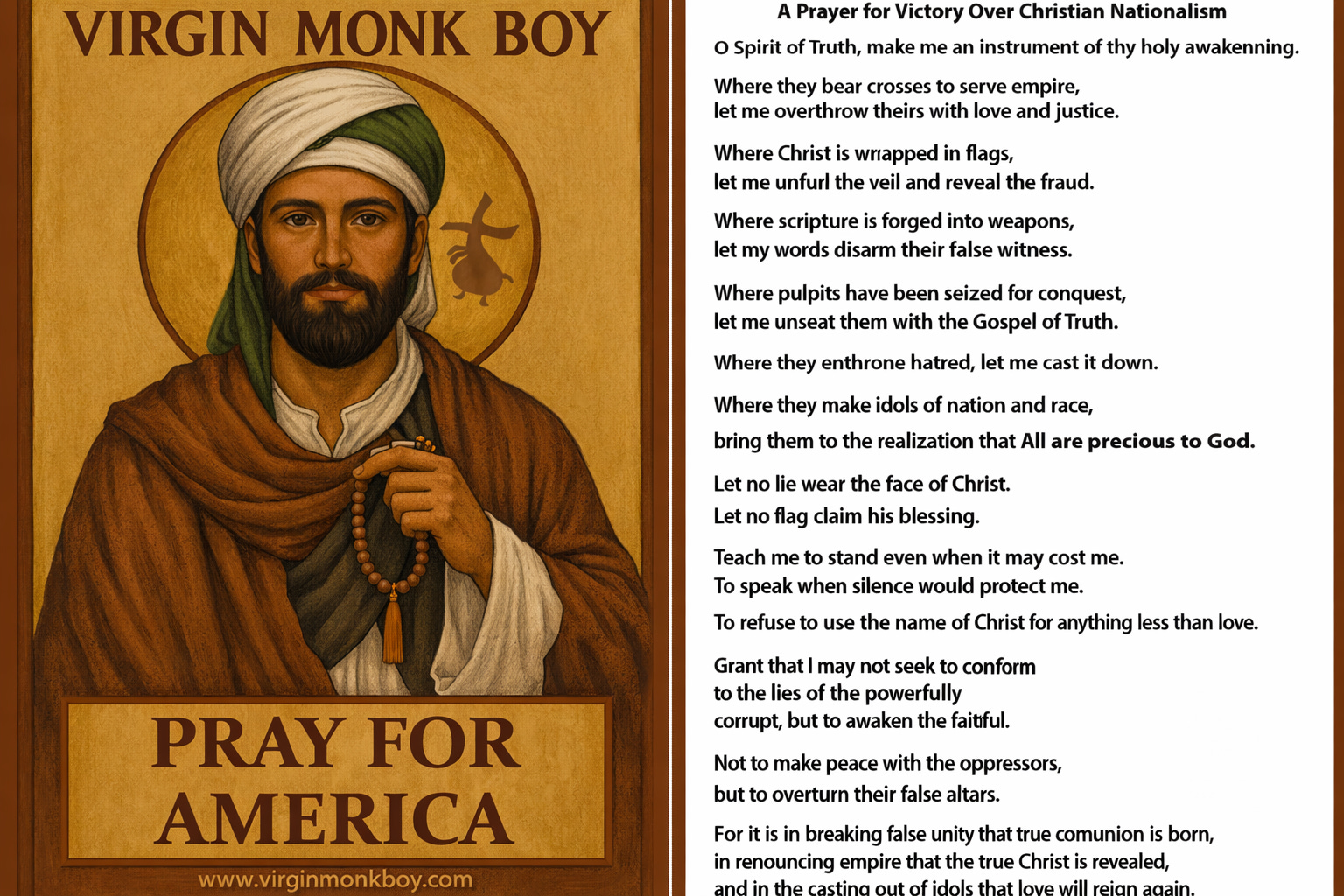
Share the image below with your favorite Christian Nationalist.
I was also drawn to explore Sufism and found it relates a lot the 12 Steps actually.. it’s a path of submission or surrendering the ego in a regular and committed way. As a way of life, it simply works.
Thank you for this thoughtful piece, VMB.
It resonates more powerfully than you could ever know.